Category: Uncategorized

  • Kiltmaking project 2026

    Kiltmaking project 2026

    I have been thinking a lot since the Heritage Crafts event last week — about the conversations I had, the shared concerns that kept coming up, and the quiet agreement in the room that something needs to change if traditional crafts like kiltmaking are going to remain viable in the long term. One conversation in particular stayed with me: I spoke with an academic who is researching pay and working conditions in kiltmaking, and hearing their perspective really sharpened some of the questions I have been grappling with at Làmhan.

    One theme that came up again and again was sustainability. Not environmenal sustainabilty – another topic all together which we are passionate about. About financial sustainability for organisations, but alo sustainability for the people actually doing the making — particularly in the context of the rising cost of living. Fair pay, realistic expectations, and working structures that do not rely on burnout or unpaid labour felt more urgent than ever. That is something we have been reflecting on deeply at Làmhan over the past year, and it has shaped the way we are approaching our next phase of work.

    We are about to launch a new project focused on supporting traditional kiltmaking through transparent pricing, fair pay, and flexible, home-based working. The project is still in its initial stages, but the values underpinning it are clear: recognising experience, paying makers properly for their skill and time, and building a model that can support both established makers and those earlier in their careers. We will be launching our new service in the Spring.

    Before going any further, it is important to say this clearly: this pricing structure is not intended to be an industry standard. Kiltmakers and other professionals are of course free to charge whatever they feel is appropriate for their work, and there is no single “right” way to price a handmade garment. What follows simply reflects how we have chosen to work at Làmhan, based on our values, responsibilities as a charity, and the realities of our context.

    To support this work, we are now inviting applications from kiltmakers to work with us on a freelance basis. We are interested in hearing from makers at a range of experience levels, from apprentices through to highly experienced kiltmakers. All work will be commissioned individually, with kilts made from the maker’s own home workspace.

    A core part of this project is transparency about both maker pay and customer pricing. Each kilt will be priced as labour + cloth + materials. Labour prices will be set according to the experience of the kiltmaker. From the labour price paid by the customer, a fixed £100 contribution supports Làmhan’s charitable work, including coordination, administration, training, and long-term sustainability. All remaining labour will be paid directly to the kiltmaker on a per-kilt basis.

    Cloth will be charged separately at cost, as tartans are priced differently by mills. Most traditional 8-yard men’s kilts require four metres of double-width tartan, typically priced at £30–£35 per metre. Very tall clients may require eight metres, as cloth cannot be split. In addition, a fixed £20 materials charge applies to every kilt, covering buckles, canvas, thread, and internal construction materials.

    Kiltmaker pay and indicative customer pricing (men’s hand-sewn kilt)

    Experience levelYears of experiencePaid to kiltmakerCharity contributionLabour charged to customerEstimated total price*
    Apprentice0–1 year£400£100£500~£650
    Junior1–3 years£500£100£600~£750
    Established3–5 years£600£100£700~£850
    Senior5–10 years£700£100£800~£950
    Master10+ years£800£100£900~£1,050

    *Estimated total includes labour, £130 cloth (average) and £20 materials. Cloth costs vary by tartan and height.

    These rates assume a traditional hand-sewn men’s kilt and reflect both experience and efficiency. Work will be paid per kilt rather than per hour, allowing experienced makers to benefit from speed and judgement while ensuring apprentices are paid fairly.

    We recognise that commissioning a handmade kilt is a significant purchase. Customers will be able to pay in instalments, allowing the cost to be spread over time. This does not change the total price and helps make a commissioned garment more manageable, while ensuring kiltmakers are paid fairly and promptly.

    Short interviews with kiltmakers will be held via Microsoft Teams, and we aim to keep the process straightforward and respectful of people’s time.

    To apply, we ask for a short covering letter telling us about your kiltmaking practice, why you are a kiltmaker and why you want to work with us, a CV or work history, and a portfolio of work. Portfolios can be shared in whatever format suits you best — photographs, a website, Instagram, or a PDF are all welcome. Please email to Jo at hello@lamhan.scot. Ideally we’d like to see several different styles.

    The deadline for applications is 16th February at 5pm.

    If you have any questions before applying, you’re very welcome to send us a message on Instagram or email Jo at hello@lamhan.scot.

    This project is still evolving, but it’s rooted in conversations like those at the Heritage Crafts event — conversations about how we value skill, how we support people to stay in the craft long term, and how we build systems that are fair, transparent, and sustainable. We’re looking forward to seeing where it leads, and to working with kiltmakers who share those values.

  • Legacies of Slavery: Reflecting on a Complex Heritage in Rural Scotland

    Legacies of Slavery: Reflecting on a Complex Heritage in Rural Scotland

    The small village of Aberlour, which is beautifully situated near the river Spey in Moray and is famed for a whisky of the same name, and the even smaller neigbouring village of Craigellachie, stand as testaments to resilience, faith, and community spirit. Yet, like many places across Scotland, their history is entangled with the darker legacies of the transatlantic slave economy. A new project, Legacies of Slavery: Churches, Communities and Buiding a Fairer Future, led by Dr Jim MacPherson of the University of the Highlands and Islands (UHI) in partnership with the Church of Scotland, invites the local community to engage thoughtfully with this complex past.

    Using the case study of Alexander Grant of Aberlour and his niece, Margaret MacPherson Grant, the project encourages reflection on how the money made from chattel slavery in Jamaica were channelled back into the local community—particularly through the endowments that funded the building of Aberlour’s local Episcopal church. Through research, education, and creative expression, this initiative aims to foster an honest dialogue about the ways historical injustices continue to shape the present.

    A Legacy Rooted in Jamaica

    Alexander Grant’s life epitomises the intersections between Scotland’s local histories and the global reach of the British Empire. As an enslaver operating in Jamaica during the height of the transatlantic slave trade, Grant amassed considerable wealth from the forced labour of enslaved Africans producing sugar and rum. This wealth did not remain distant. Upon returning to Scotland, the money was infused into his local community through investments, philanthropy, and, notably, then through his niece, Margaret MacPherson Grant.

    Margaret, who inherited a significant portion of Alexander Grant’s fortune, became a well-known benefactor in Aberlour. Among her most enduring contributions was her financial support for the construction of the local Episcopal parish church—a structure still central to village life today. Yet beneath its stone walls and stained glass lies a more troubling story: one that ties the fabric of a Scottish community to the brutal realities of Caribbean plantations.

    Uncovering and Confronting Hidden Histories

    The Legacies of Slavery project seeks not to erase or diminish the importance of the church and its place in the community, but rather to provide a fuller, more honest understanding of how it came to be. By focusing on Alexander and Margaret’s intertwined stories, the project opens a necessary space for local people to consider how slavery’s profits helped shape their familiar surroundings.

    This approach reflects a broader movement across Scotland and the wider UK to reckon with the deep imprints of slavery on national and local histories. Through research and public engagement, communities like Aberlour and Craigellachie are beginning to ask difficult but essential questions: Whose suffering financed our heritage? How should we commemorate benefactors whose wealth was built on human misery? How do we balance pride in local traditions with an awareness of their origins?

    The Colonial Countryside project, led by Professor Corinne Fowler of the University of Leicester in collaboration with the National Trust, exemplified how difficult histories—particularly those involving chattel slavery and colonialism—can be meaningfully explored through creative expression. This pioneering initiative engaged around 100 children from diverse backgrounds in researching and reinterpreting the colonial histories of (English) National Trust properties. Through writing workshops, public speaking events, and the co-creation of exhibitions, these young participants brought to light the often-overlooked connections between Britain’s country houses and its imperial past. Their creative outputs not only enriched public understanding but also demonstrated that confronting uncomfortable aspects of history can foster education, empathy, and dialogue within communities. 

    This video below is my favourite outcome of this project, which I am sure you will agree is beautiful.

     Creativity & Healing Through Textiles

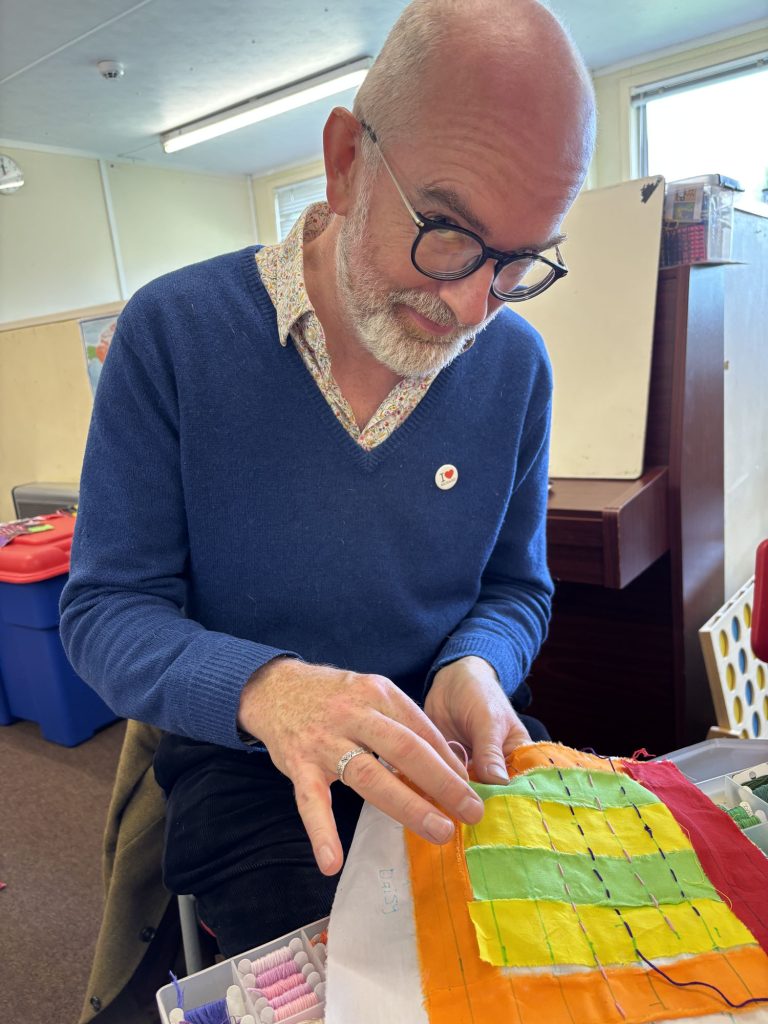
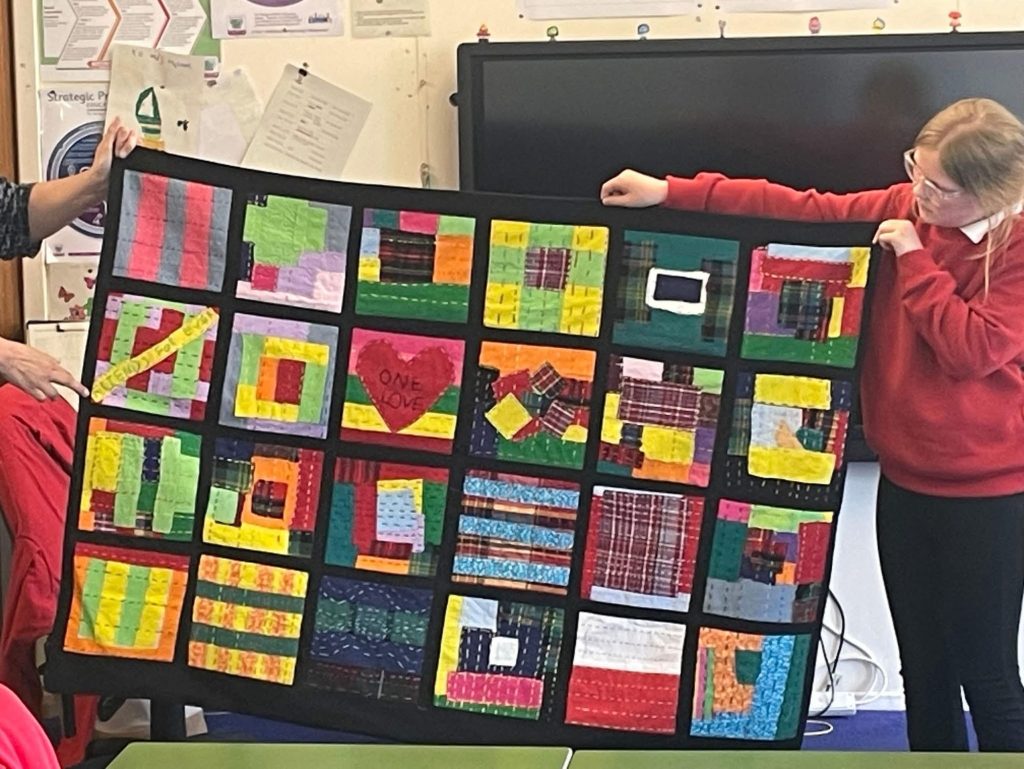
    One of the project’s most innovative components involves the use of creative textile art to engage with these heavy themes. Jo Watson of Làmhan, a former UHI postgraduate student who studied the legacies of slavery under Dr MacPherson, will be leading a series of textile workshops for children and parishioners. These sessions aim to explore sensitive histories through tactile, participatory means. Jo will be leading sessions with local communities and schools in May and June 2025.

    Textile work has long been a medium for storytelling and memory-keeping. By designing then stitching, and creating together, participants are offered a gentle but profound way to process difficult knowledge and to contribute to a new, collective memory for Aberlour and Craigellachie —one that acknowledges pain but also looks toward hope and understanding.

    Jamaican bandana cloth, characterised by its vibrant check patterns, has a complex history that intertwines colonial legacies with cultural reclamation. Originally produced in Madras (now Chennai), India, this lightweight cotton fabric was exported by the British during the late 18th – 19th century to clothe enslaved individuals in the Caribbean due to its affordability and durability. 

    Over time, Jamaicans have transformed bandana cloth into a symbol of national pride and cultural identity. Notably, folklorist Louise Bennett-Coverley, affectionately known as ‘Miss Lou,’ popularised the fabric by incorporating it into traditional performances, solidifying its place in Jamaican heritage. The bandana’s check design bears a resemblance to Scottish tartan, reflecting the historical connections between Scotland and Jamaica, including the migration of Scottish settlers and the influence of Scottish culture on the island, as well as on Chennai. Today, bandana is prominently featured in Jamaica’s national costume and is worn during cultural celebrations, symbolising resilience, and the enduring spirit of the Jamaican people. To learn more about this cloth, and other textiles worn by the enslaved, please see this excellent blogpost.

    In our upcoming textile workshops, participants will have the opportunity to work with authentic Jamaican bandana cloth alongside locally sourced Scottish textiles. This hands-on experience aims to foster a deeper understanding of the intertwined histories and cultural narratives embodied in these fabrics, encouraging creative expression and reflection within the community.

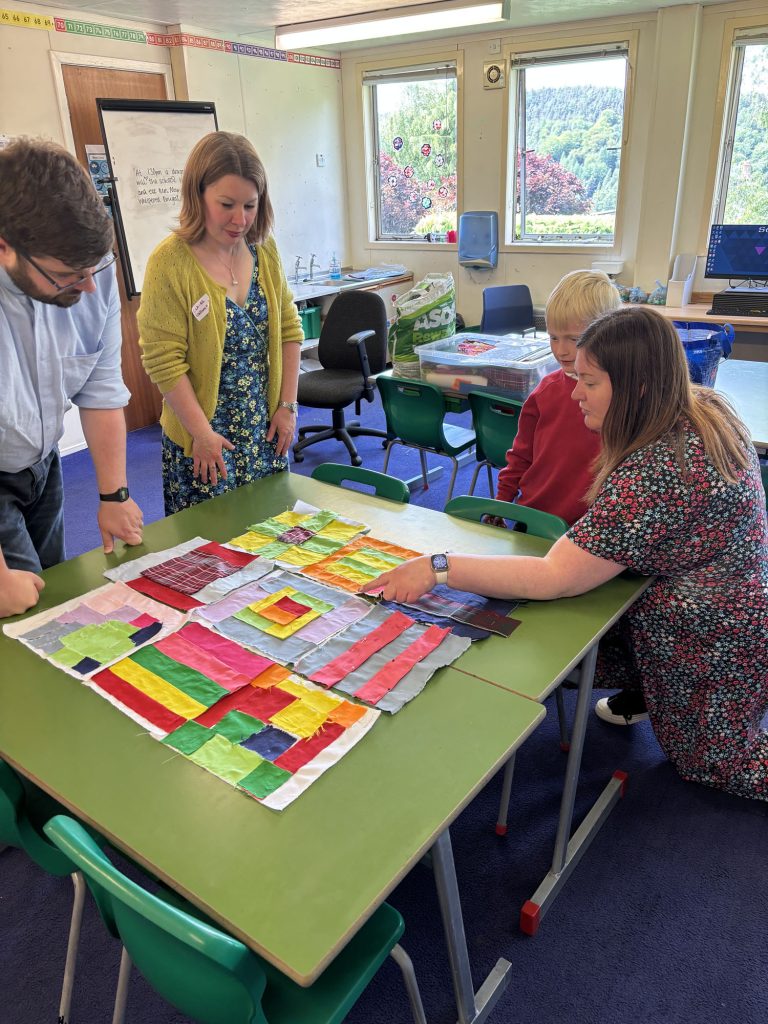
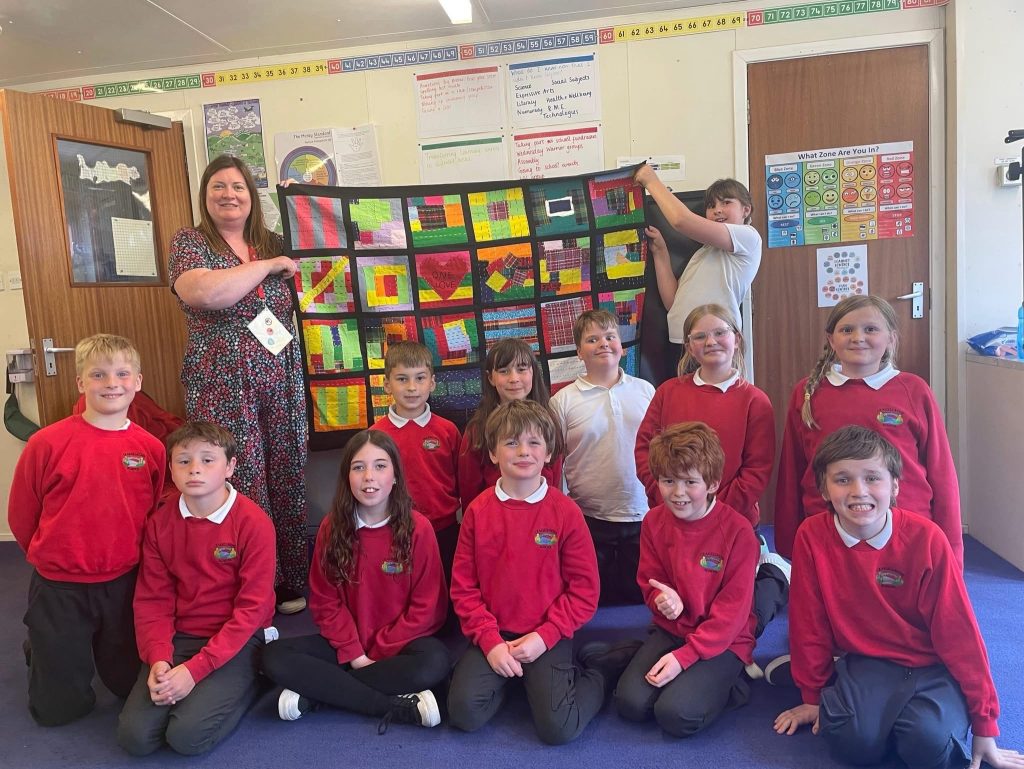
    The workshops will encourage participants to interpret what they have learned about Aberlour and Craigellachie’s connections to slavery and express their reflections through textile art, culminating in a banner for display in the church. In doing so, the community becomes active agents in shaping the narrative, bridging the gap between past injustices and present consciousness.

    The image below comes from James Hakewill’s A Picturesque Tour of the Island of Jamaica, 1820-1821. Which you can view online here

    Reflection, Responsibility, and Renewal

    Projects like Legacies of Slavery do not offer easy answers. Instead, they provide frameworks for grappling with the moral complexities of history. They call on communities to recognise that the benefits of past injustices often still ripple through societies today—economically, socially, and culturally.

    For Aberlour and Craigellachie, this means reflecting not only on the building of a church but on the lives irreparably harmed to make such philanthropy possible. It means accepting that history is rarely pure or simple. And it means committing to education, dialogue, and remembrance in ways that honour all parts of the story.

    At the same time, the project highlights the possibility of renewal. By engaging children, parishioners, and the wider community in reflective and creative acts, Aberlour and Craigellachie are demonstrating that facing the past honestly can lead to stronger, more compassionate communities.

    Looking Forward

    The Legacies of Slavery project is part of a broader societal shift towards reckoning with uncomfortable histories. Yet it is also uniquely rooted in its local context, responding to the specific heritage, architecture, and people of Aberlour and Craigellachie.

    In recognising the full story of figures like Alexander Grant and Margaret MacPherson Grant, the community is not tearing down its past but enriching it—making room for deeper understanding and a more inclusive memory. By integrating research, creative expression, and open conversation, Aberlour and Craigellachie are taking meaningful steps towards acknowledging their place in a global story of suffering, survival, and the ongoing quest for justice.

    Through projects like this, small communities across Scotland are demonstrating that the legacies of slavery are not merely historical footnotes but living realities that deserve careful attention. In Aberlour and Craigellachie, threads of history, memory, and hope will be stitched together—one thoughtful conversation, and one piece of fabric at a time.

  • Sewing for the Soul: The Mental Health Benefits of Sewing in Small Groups

    Sewing for the Soul: The Mental Health Benefits of Sewing in Small Groups

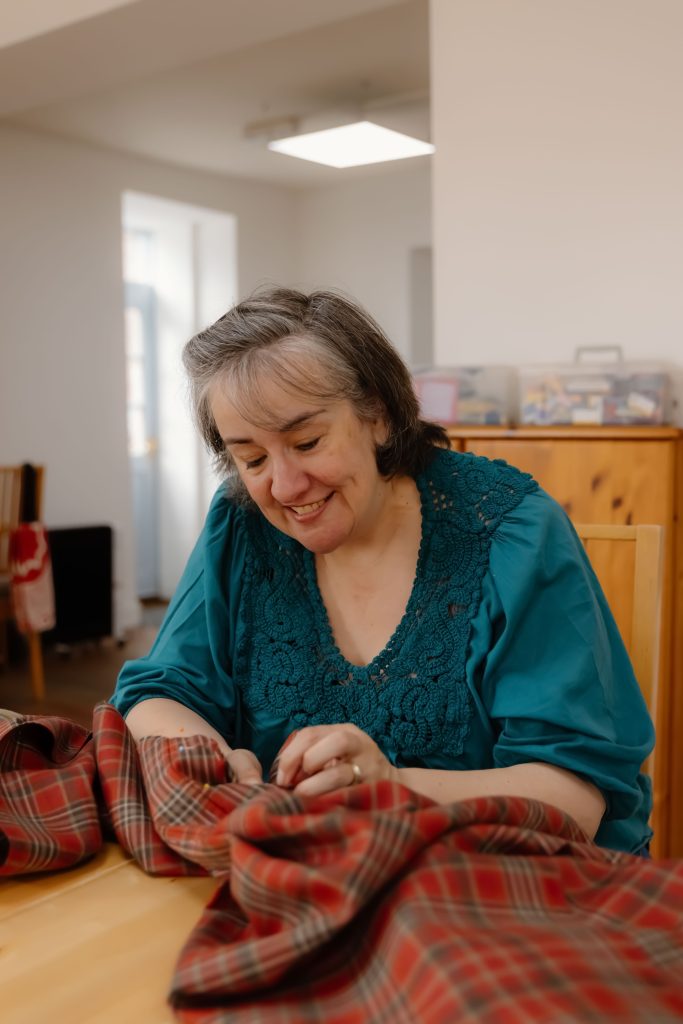
    There is a particular kind of quiet that settles over a room when someone begins to stitch. It is not silence exactly, but a softening. A slowing. A shift in the air as hands take up familiar tools and the body remembers a rhythm older than memory. The needle dips, the thread follows, the fabric yields, and something inside the maker begins to settle. For many people, this simple act of stitching is far more than a craft. It is a way of grounding themselves, of finding steadiness in a world that often feels overwhelming, and of reconnecting with parts of themselves that have been neglected or bruised by life’s demands. Increasingly, research supports what generations of makers have known intuitively: working with our hands is profoundly good for our mental health.

    Stitching is a deeply embodied activity. It requires the cooperation of mind, body, and breath, drawing us into a state of focused attention that is both calming and restorative. The repetitive, rhythmic movements of needlework activate the parasympathetic nervous system, the branch of the autonomic nervous system responsible for rest, recovery, and emotional regulation (Porges, 2011). This is the same physiological response triggered by slow breathing, gentle rocking, or humming. When we stitch, our heart rate slows, our breathing deepens, and our bodies shift into a state that supports healing rather than vigilance. In a world where many people live in a near‑constant state of stress or hyperarousal, this shift is not trivial. It is a doorway back into safety.

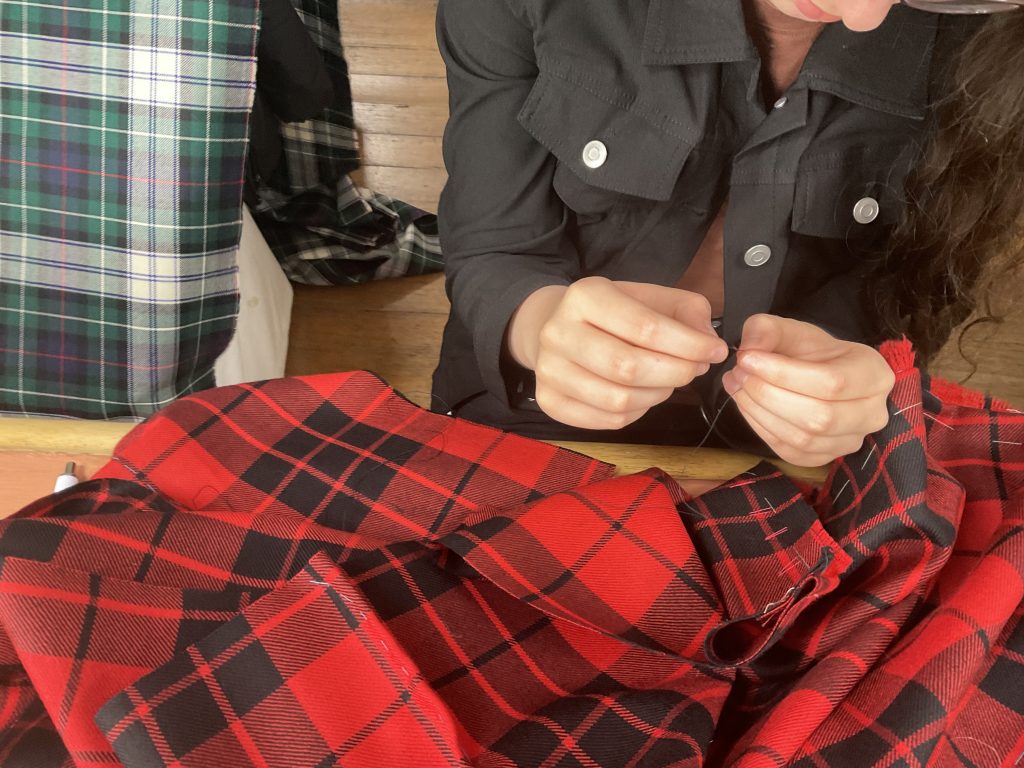
    Sewing

    The mental focus required for stitching is also a form of mindfulness. Unlike meditation, which some people find abstract or difficult to access, stitching offers a concrete anchor for attention. The mind is invited to rest on the feel of the fabric, the movement of the needle, the colour of the thread, the small, deliberate actions that build into something meaningful. Research shows that mindful, hands‑on activities reduce anxiety, improve emotional regulation, and support overall psychological wellbeing (Keng, Smoski and Robins, 2011). Stitching provides this mindful state almost effortlessly. The craft itself does the guiding. The maker simply follows.

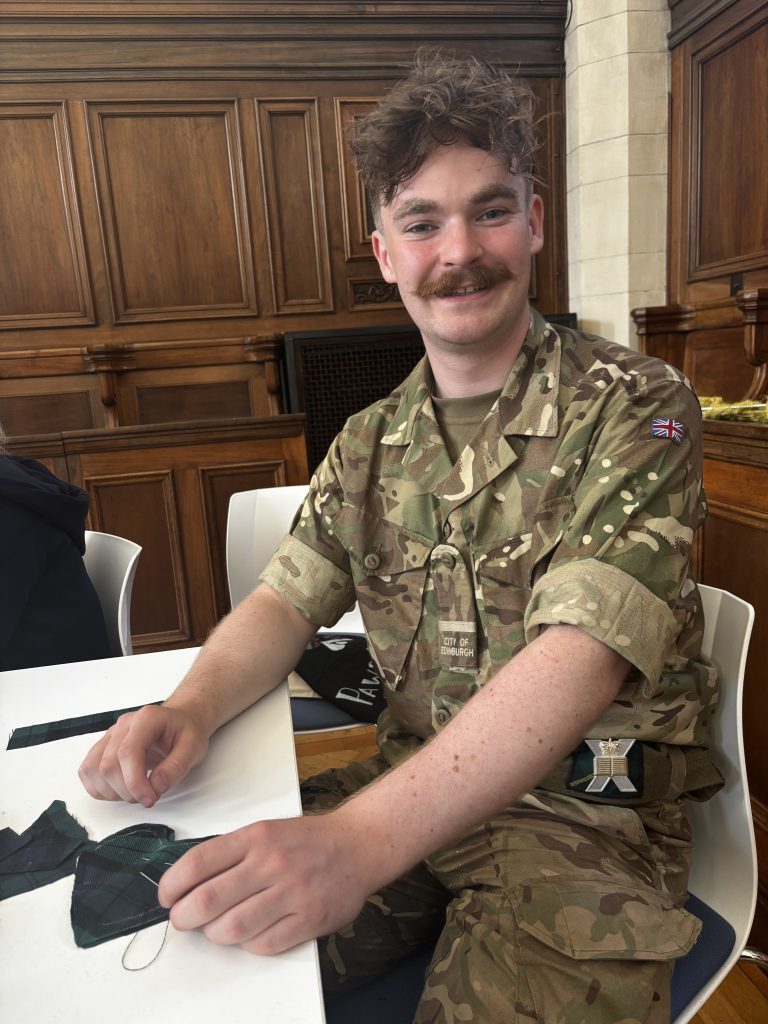
    Soldier sewing

    One of the most powerful aspects of stitching is the sense of achievement it provides. Even a small piece of work—a neatly sewn seam, a repaired tear, a finished patch—can create a feeling of progress and capability. Studies show that completing meaningful tasks activates the brain’s reward pathways and boosts self‑esteem (Hekler et al., 2013). For people who are struggling with depression, trauma, or chronic stress, this sense of accomplishment can be especially important. It offers a reminder that they are capable of creating something good, something useful, something beautiful. It is a quiet but potent antidote to feelings of helplessness.

    Stitching also offers a rare sense of control. In a life that may feel chaotic or unpredictable, the small, deliberate actions of needlework provide a space where the maker’s choices have clear, visible outcomes. Each stitch is a decision. Each row is a small act of agency. Over time, these small acts accumulate into something larger—a garment, a repair, a piece of art—and the maker can see the tangible results of their effort. This sense of control is not merely symbolic. Research shows that activities which allow individuals to make meaningful choices and see the results of their actions support psychological resilience and reduce feelings of powerlessness (Fancourt and Finn, 2019).

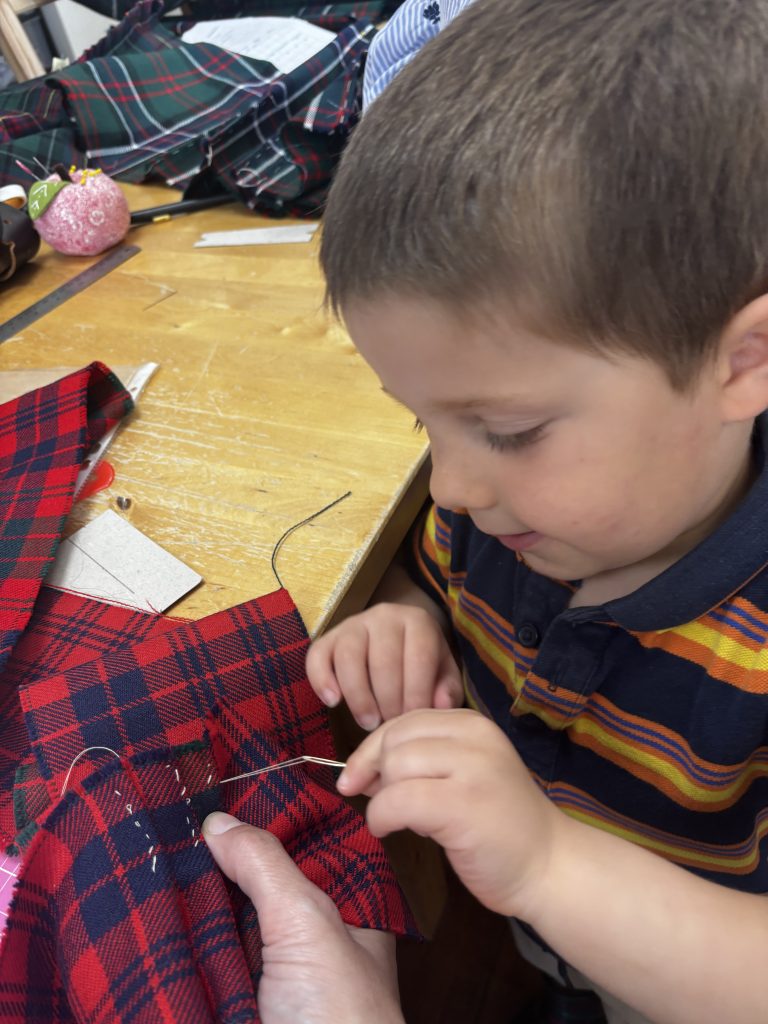
    Sewing

    Beyond the individual experience, stitching has long been a communal activity. Historically, people gathered to sew, mend, and create together, sharing stories, skills, and support. That tradition continues today in craft groups, sewing circles, and community workshops. Research shows that shared creative activities reduce loneliness, increase feelings of belonging, and strengthen social bonds (Johnson and Wilson, 2005). In a time when many people feel isolated or disconnected, the simple act of sitting together with fabric and thread can create a sense of community that is both gentle and profound. Conversation flows more easily when hands are busy. People feel less exposed, more grounded, more able to share their experiences. The craft becomes a bridge between individuals, offering connection without pressure.

    Stitching can also serve as a way to process emotions. The slow, repetitive movements create a space where thoughts can settle and feelings can be explored safely. Many people find that stitching helps them work through grief, trauma, or stress in a grounded, embodied way. The act of making becomes a form of emotional regulation, allowing difficult feelings to be held without becoming overwhelming. This aligns with research showing that creative activities support emotional expression and help individuals make sense of their experiences (Pöllänen, 2015). Stitching, in this sense, becomes a form of self‑care that is both gentle and deeply effective.

    The cognitive benefits of stitching are also significant. Activities that involve fine motor skills, sustained attention, and problem‑solving have been shown to support cognitive resilience and improve memory (Park et al., 2014). For older adults, engaging in textile crafts can help maintain cognitive function and provide a sense of purpose. For younger people, stitching can support focus, patience, and the development of practical skills. Across all ages, the cognitive engagement required for stitching offers a healthy challenge that keeps the mind active and engaged.

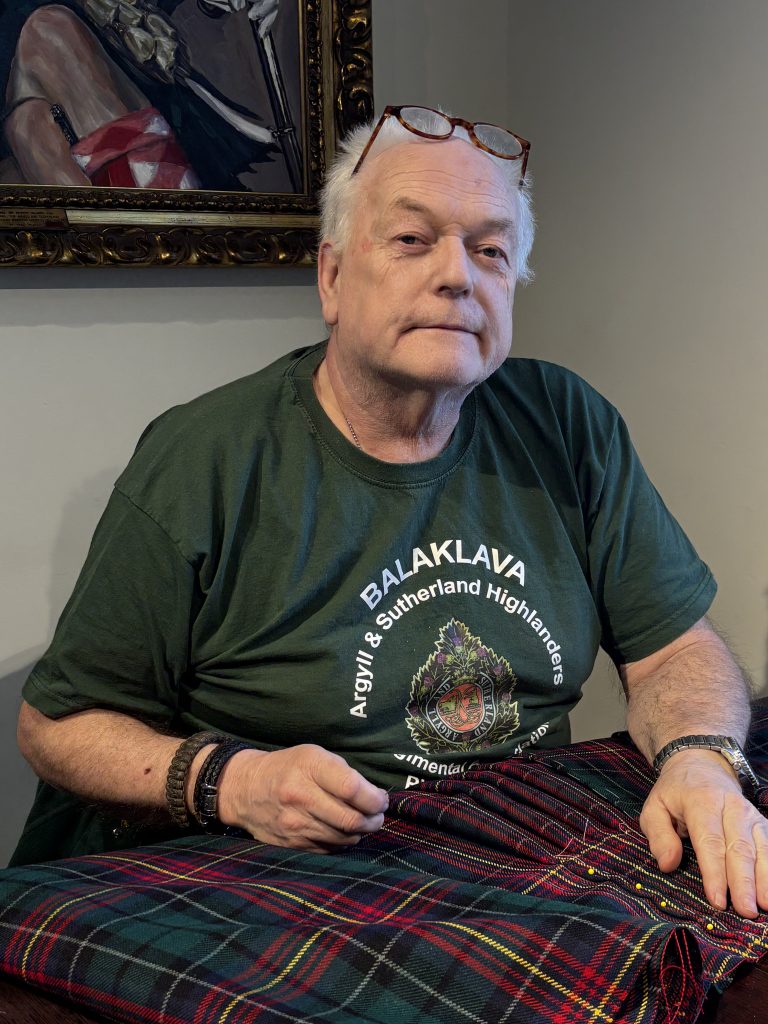
    Sewing

    A growing body of research supports the mental health benefits of textile crafts. A large survey of more than 3,500 knitters found that frequent engagement in knitting was associated with higher levels of calm, happiness, and social connection (Riley, Corkhill and Morris, 2013). Other studies have shown that creative activities, including sewing and embroidery, reduce stress, improve mood, and support recovery from depression (Fancourt and Finn, 2019). These findings reinforce what many people experience firsthand: stitching is not merely a hobby. It is a meaningful, evidence‑based tool for supporting mental health and wellbeing.

    In our own workshops, we see these benefits every day. Someone arrives tense, withdrawn, or unsure of themselves. They sit down, pick up a needle, and begin to stitch. Their shoulders drop. Their breathing deepens. A small smile appears when a seam sits just right. A conversation begins. A connection forms. Over time, we see people grow in confidence, skill, and self‑belief. We see them find community, purpose, and moments of peace. We see them rediscover parts of themselves that had been lost or neglected. Stitching does not fix everything, but it offers a place to begin again. It offers a way to rebuild, slowly and steadily, one stitch at a time.

    The beauty of stitching is that it meets people where they are. It does not demand perfection. It does not require expensive materials or specialised equipment. It simply asks for presence, patience, and a willingness to begin. In return, it offers calm, connection, and a sense of accomplishment. It offers a way to care for oneself that is both practical and deeply nurturing. In a world that often prioritises speed, productivity, and constant stimulation, stitching invites us to slow down, to breathe, and to reconnect with our own hands and hearts.

    For some, stitching becomes a daily ritual, a way to mark time and create moments of stillness. For others, it becomes a social activity, a way to build friendships and share stories. For many, it becomes a form of healing, a way to process emotions and rebuild confidence. Whatever form it takes, stitching offers something valuable and enduring. It reminds us that we are capable of creating beauty, of repairing what is damaged, and of finding meaning in small, steady actions.

    As we continue to explore the role of craft in mental health, it becomes increasingly clear that stitching is not simply a pastime. It is a practice that supports wellbeing on multiple levels—physiological, emotional, cognitive, and social. It is a way of caring for ourselves and for one another. It is a reminder that healing does not always come in grand gestures or dramatic breakthroughs. Sometimes, it comes in the quiet, patient work of needle and thread.


    References

    Fancourt, D. and Finn, S. (2019) What is the evidence on the role of the arts in improving health and well-being? WHO Regional Office for Europe.

    Hekler, E.B., Gardner, C.D., Robinson, T.N. and Alderman, B.L. (2013) ‘Effects of completing a meaningful task on affective states’, Emotion, 13(3), pp. 481–490.

    Johnson, J. and Wilson, L. (2005) ‘“It’s the doing that matters”: A study of craft practice’, Journal of Design History, 18(1), pp. 23–38.

    Keng, S.L., Smoski, M.J. and Robins, C.J. (2011) ‘Effects of mindfulness on psychological health’, Clinical Psychology Review, 31(6), pp. 1041–1056.

    Park, D.C., Lodi‑Smith, J., Drew, L. et al. (2014) ‘The impact of sustained engagement on cognitive function in older adults’, Psychological Science, 25(1), pp. 103–112.

    Pöllänen, S. (2015) ‘Elements of crafts that enhance well-being’, Journal of Leisure Research, 47(1), pp. 58–78.

    Porges, S.W. (2011) The Polyvagal Theory: Neurophysiological Foundations of Emotions, Attachment, Communication, and Self-Regulation. New York: W.W. Norton.

    Riley, J., Corkhill, B. and Morris, C. (2013) ‘The benefits of knitting for personal and social wellbeing in adulthood’, British Journal of Occupational Therapy, 76(2), pp. 50–57.